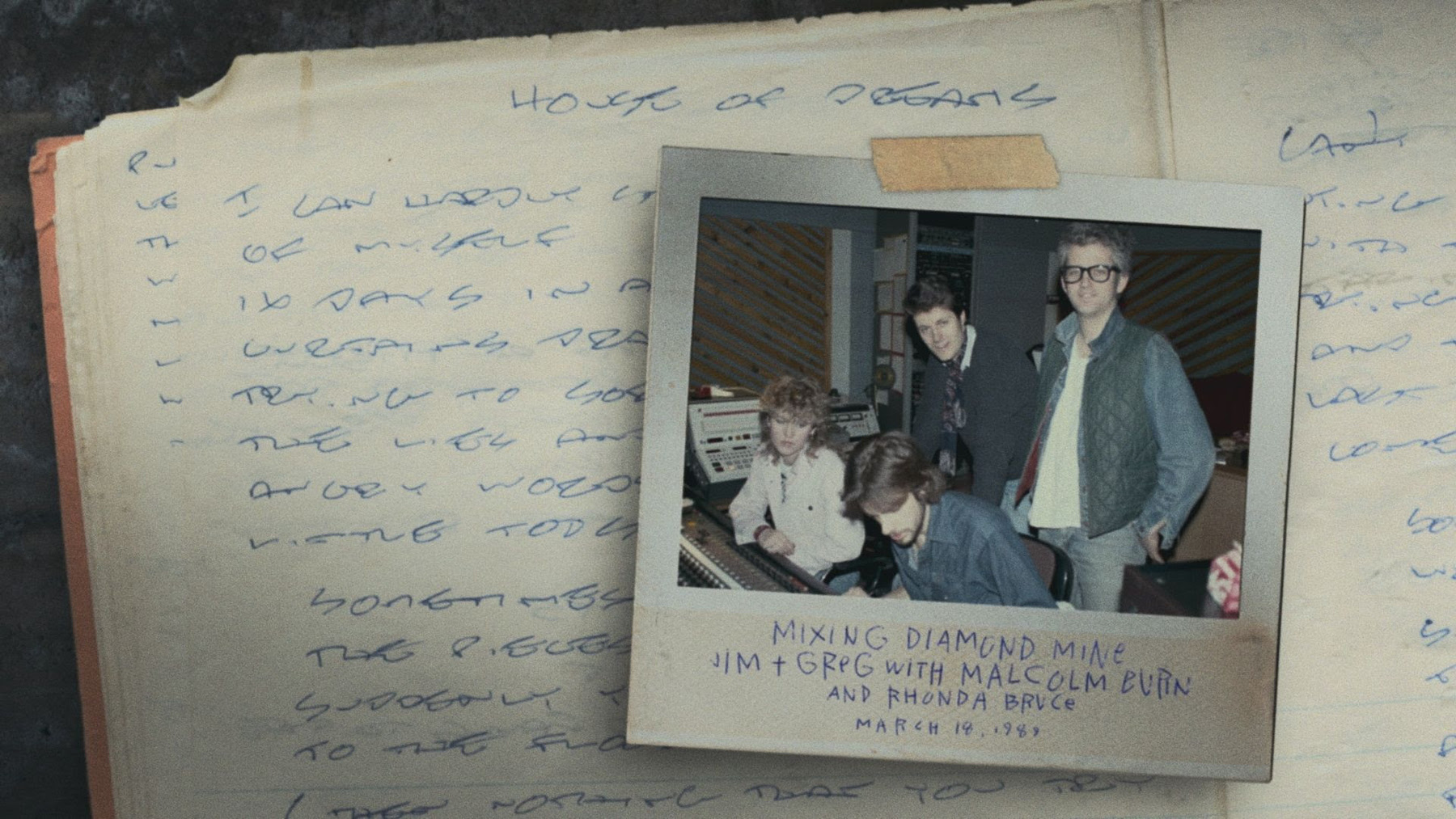
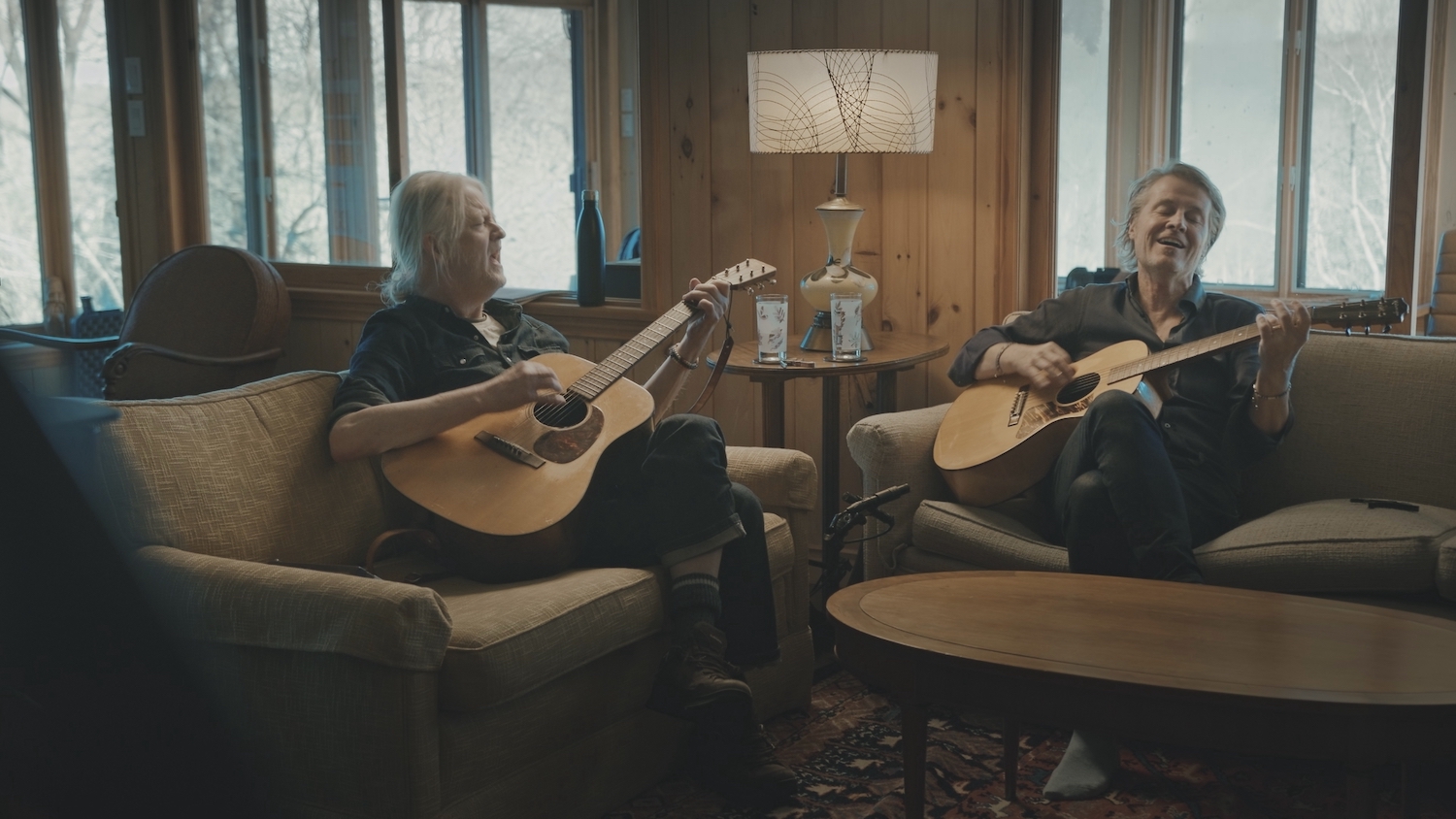
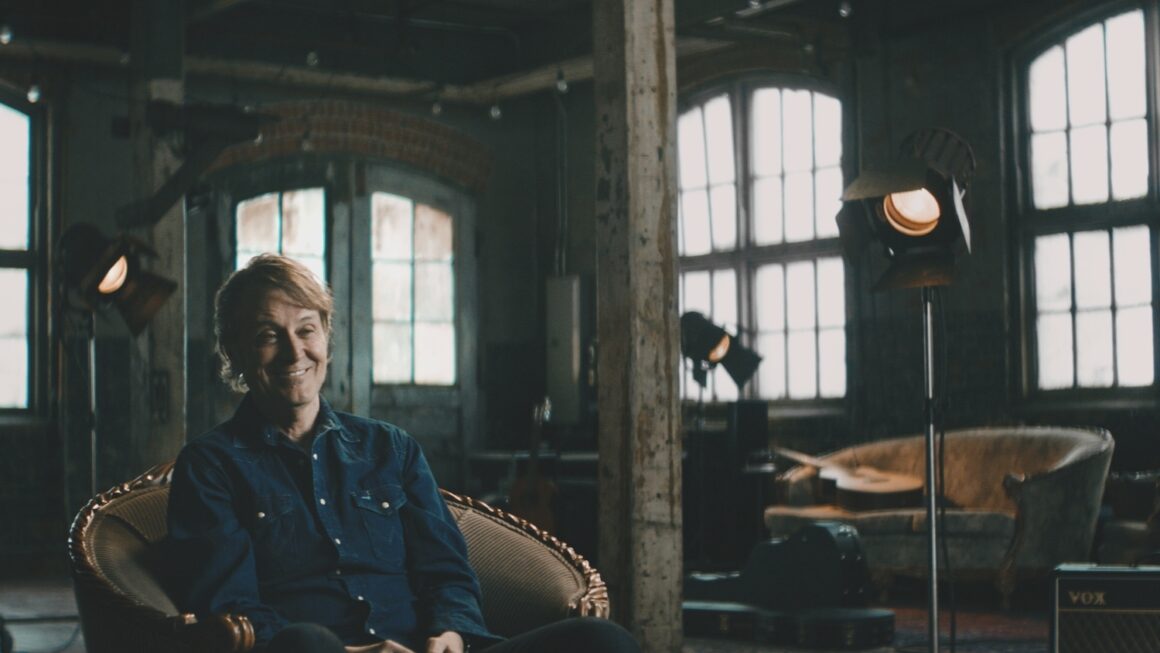
Blue Rodeo has been approached a handful of times to do a documentary throughout its 40-year career. But it never made sense in the past, says Jim Cuddy, frontman of the iconic Canadian band. Now, the country rock group is offering an intimate and revealing look into its inner workings through the decades – from soaking up Queen West’s gritty 1980s hay day, to casually jamming at Cuddy’s farm in their golden years – in Blue Rodeo: Lost Together. Directed by award-winning filmmaker Dale Heslip, a close friend of the band’s for over four decades, the new documentary is candidly driven by Cuddy and fellow lead singer-songwriter Greg Keelor. It begins its theatrical run across Canada on February 1, opening in Toronto at Hot Docs Cinema, with a wider rollout in Cineplex Cinemas February 2 and 3 across the country.
Putting Blue Rodeo “on the pedestal they deserve”
With 11 JUNO awards, a star on Canada’s Walk of Fame, and millions of records sold, Blue Rodeo is solidified as one of Canada’s most beloved and long-running bands. “It’s a career that needs to be celebrated; it’s a body of music that needs to be celebrated,” says Heslip of his choice to make the film. “There’s a lot of people who know the music but don’t connect the music to the band. So, we wanted to put Blue Rodeo on the pedestal they deserve, along with Joni Mitchell and Gordon Lightfoot. We also wanted to say that they’ve got this whole body of work that’s amazing. We wanted to tell people about it.”
As for the band members, they were finally ready to document their storied journey since Blue Rodeo’s formation in 1984. “Years ago, we were thinking about doing a television show and trying to launch it,” recalls Cuddy. “An executive we approached wanted to see us do a musical variety show, and one of the things he said was, ‘What I see is one of you in a house, coming down a slide, and at the bottom, starting to sing Try.’ We thought, ‘Wow, that’s probably not our world.’ So, there have been a lot of wrong proposals for us. But, with the 40-year anniversary, there seemed to be a reason to document where we’ve been.”
ADVERTISEMENT |
Heslip and his team made a natural fit for the feat. “We’ve obviously known Dale for a long time and they were going to tell our story – the rest was in their hands,” says Cuddy. “Dale and Ralph [writer Ralph Chapman] sculpted a great story, with an arc that makes the whole thing make sense. The train is going through Greg’s [Keelor] and my relationship and how we started this band, and then all of the other things along the way that passengers on that train can see.”
The audience learns of the intricacies of the deep, complex, and complementary brother-like relationship between Cuddy and Keelor – high school friends who first met at North Toronto Collegiate Institute in midtown Toronto in the late 60s and early 70s. Differences of the pair – Cuddy is notably more structured and focused in lifestyle and work ethic, while Keelor is more of a free spirit and off-the-beaten path type of guy – are highlighted throughout the film. The audience will learn things they may not know about the band. For example, Cuddy was the high school quarterback, Keelor once woke up in a flaming bed (Google the lyrics to “Flaming Bed”), Cuddy would go for a morning run while on tour, and Keelor was once set to quit the band.
Fellow famous Canadian faces, like Sarah McLachlan, Tegan and Sara, and Erik McCormack, appear in the doc, sharing their Blue Rodeo sentiments.

“A whole other level of revealing myself”
While Cuddy, now approaching 70, is obviously no stranger to performing or being interviewed, the documentary presented a new set of challenges. He admits he was nervous going into it. “I think I sort of have a professional veneer when I’m talking and try to be as open as honest as I can be, but this required a whole other level of revealing myself, and it wasn’t easy for me,” says Cuddy. “I didn’t even realize I was so guarded until I started to hear what the other guys were talking about. There were a few times we all had to chat and say, ‘You know, obviously we’re doing a documentary, but how honest do we want to be? Which incidents are we going to share?’”
ADVERTISEMENT |
With that said, Cuddy acknowledges that – unlike many other bands – Blue Rodeo’s story isn’t one negatively marked by “anything serious.” They didn’t get arrested, avoided headline-selling scandals, and didn’t infamously engage in overly high-risk behaviours. “We’re not a band that’s known for its disgusting behaviour,” says Cuddy. “But we have all the things that happen to people in a long-term relationship. So, it was intimidating, but then you just give into it. Seeing the rough cut was nerve-wracking. I was like, ‘Did I really say that?’ It’s ok; it was all part of the process. We were really aware that we were laying down a document about what had happened to us over 40 years and that did require a bit of cracking open the soul.”
While Cuddy and his wife Rena Polley, with whom he shares three children, have maintained a relatively private relationship through the decades, she appears in the film, discussing less-than-ideal times for the couple when Cuddy was on the road and she was home managing the household alone. “The band is more used to being under the microscope, so I think my wife suffered more because she’s typically been more guarded,” says Cuddy. “But she plays an important role in the film and validates things that are said and our lives. We had to talk about our relationship, and that’s not easy. It all matters though and is the reason it’s a good doc – people tell the truth.”

A dose of nostalgia
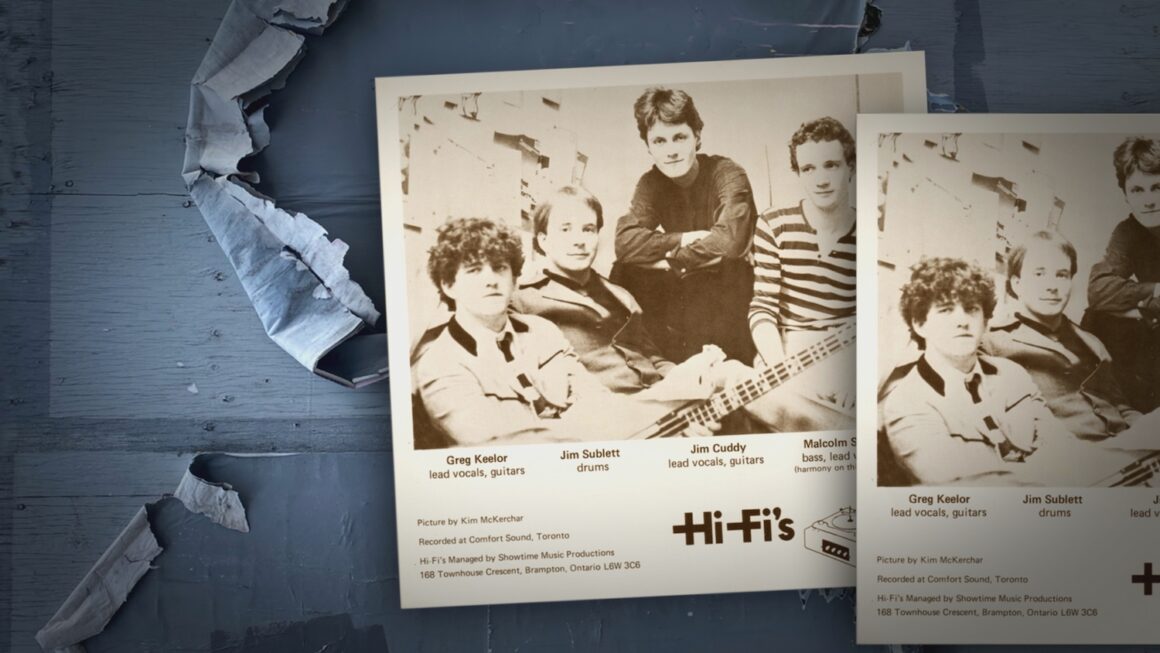
From retro photos and MuchMusic interviews, to grainy footage of the band playing at packed venues in the 80s (with not a cell phone in sight) – they were regulars at Horseshoe Tavern, Rivoli, and Cameron House– the film serves up no shortage of pre-digital nostalgia. For those old enough to remember Toronto’s Queen West in its glory days (pre-2000s), the doc will bring back major memories of the once-eclectic strip before condos and fast food joints began to replace vintage clothing shops, dive bars, and smaller music venues.
“What I miss was how together the community was,” reflects Cuddy of Toronto in the 80s and 90s. “When MuchMusic started, it played all the forms of music and united everyone together. So, at any MuchMusic Video Awards, everyone was together. You got to meet Indigenous artists, you got to meet rappers. Queen Street was really a supportive community, in my impression. There was no chance we were getting signed, we thought, because none of this kind of music was what was on the radio. But there were so many young people coming down to see us – all the bars would be packed. So, I miss just the excitement of that. I miss the communal aspect of it all.”
“Have a home base”
Of course, the band would soon in fact get signed and, after some initial challenges outlined in the doc, take off. This is despite Blue Rodeo’s shamless departure from the harder and more edgier rock and roll of the time.
ADVERTISEMENT |
Cuddy credits mandatory Canadian radio content rules and MuchMusic for the rise of Blue Rodeo’s fame in the 1980s. He recalls sitting at the JUNOs about two years after “Try” had hit the Canadian music charts. “I remember all the people in the front row had Platinum records and were Canadian artists,” says Cuddy. “And I thought, ‘Well, this is the best example that those initiatives worked,’ because nobody is being forced to go out and buy a record, right? So, in those days, the idea of having a Canadian music industry or recording industry was maybe a little far fetched and most of those bands that came on were probably like copycats around the world. Now, anything is possible.”
Social media and a more interconnected world has obviously changed the game for Canadian musicians (just ask Justin Bieber). “I think a lot of people are planning international careers outside of Canada,” says Cuddy. “The advice I always give people is that you have a home base. You need to be able to come home. Play somewhere, make money, or rest, but you can’t just put all your efforts into Germany, London, the States, and come back broke. I have to be able to have a homegrown audience. And that’s what we had in spades. You know, for wherever we’ve gone, we could always come home and have an audience across Canada.”
For Cuddy, it’s a fiercely dedicated audience that spans generations and includes loyal Toronto fans who never miss the annual end-of-summer Blue Rodeo concert at Budweiser Stage. “When I see people in the front row for our summer shows, I often think, ‘You’ve been coming since you were 11; it’s a yearly tradition.’” While the shows feature appreciated new music, the crowd inevitably goes wild for Blue Rodeo’s biggest long-time hits, like “Try,” “Lost Together,” “Hasn’t Hit Me Yet,” and “Til I Am Myself Again.” This begs the question: Does Cuddy ever get tired of playing these hits after so many years?
ADVERTISEMENT |
“After about five years after ‘Try’ was a hit, I was so sick of playing it,” admits Cuddy. “I took a whole year off and didn’t play it at all for a year. Obviously, crowds didn’t like that, because it was something they came to hear. Then, when I came back to it, I’ve never gotten tired of singing it again. First of all, it’s a bit of a challenge, so it’s nice. And secondly, the way that you work new songs into an audience’s mind is by goalposting them with something they want to hear. So, having those songs that please a crowd, ones that they want to hear in your back pocket, really helps to generate interest for new songs. But I don’t think I’ve been sick of singing a song for the last 20 years. I’m always appreciative that there are songs people want to hear that are fun to sing.”
Cuddy also acknowledges that Blue Rodeo has evolved into a bigger band than it once was. “We’re a seven-piece band now, and there’s all kinds of music going on,” he says. “I sort of figure I get my singing done and then listen to the guitar players and keyboard – it’s always such a great show.”
One look around a Blue Rodeo concert underscores the multigenerational nature of the band’s fanbase. “A lot of people grew up in households where our music was played,” says Cuddy. “And I think that we came around and very fortuitous time when Canadians were kind of hungry for Canadian culture. They were kind of tired of American music and things that they couldn’t naturally relate to. I think The Tragically Hip benefitted, same with KD Lang, and all kinds of Canadian bands. So, that’s where we got our foundation. Kids grew up in those households with parents who played our music.”
ADVERTISEMENT |
Furthermore, Cuddy says that not all young people can relate to the popular form of music of the generation. “Sometimes, they go looking for something where people actually play instruments,” says Cuddy. “Roots music has always had this kind of rebound effect that people say, ‘I want where people are playing music and actually singing.’ So, I think roots is always the place where you find these very long-term artists. I think we fit into that. It’s an experience to come to a live show because there’s a lot of communal joy in the audience.”
Naturally, the band’s music is the soundtrack to the documentary. “The music is timeless and they’ve created so many great songs,” says Heslip. “When you hear great music, that never goes away. So, I would like the audience to take away that these guys are awesome. They deserve all the accolades that they’ve got and will continue to get.”
The film begins streaming on CBC Gem starting February 19.