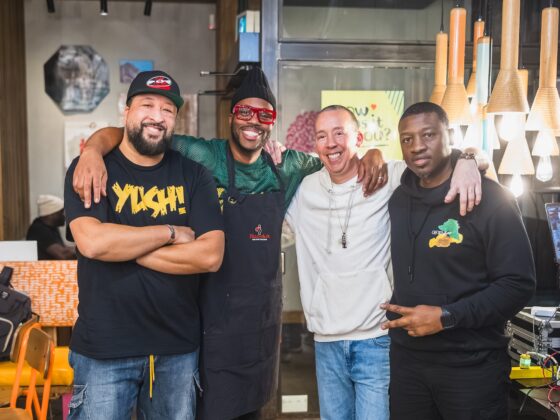

Meet Matt Howell, Director of Quality Assurance, Head Distiller and Cidermaker at COLLECTIVE ARTS in Toronto. In this Q&A we deep dive into what inspires him to make great liquid and why he’s decided to be unique in how he integrates both science and art in the process.
RELATED: Bo Horvat’s Tips for Making the Most of Your Hockey Family Morning >>>

AA – Gin is an old spirit, what and how is innovation helping to modernize it?
Matt Howell: Through the use of new innovative botanicals, spirit bases and secondary additions, the category is becoming far more diverse than it has been in the past. Traditionally, gin is an unaged spirit with juniper and maybe some other notes (ie: citrus, licorice, floral). The variety of botanicals now available to Distillers is amazingly diverse and in many cases they are playing a more prominent role than juniper. Secondary additions (ie: coloured gins) or aging (ie: barrel aged gin in various finishes) are also broadening the definition of what a gin can be
ADVERTISEMENT |
AA – What part of tradition do you look to and what do you refrain from holding onto?
MH: Utilizing what is known as the “holy trinity” of gin botanicals – juniper, coriander, orris – is what I try to hold onto. I find they give my gins a nice flavour base that I can build other flavours on. Beyond that my feeling is the sky’s the limit. Most of the gins I design exhibit other flavours and aromas as the star rather than the traditional juniper. By utilizing these unique flavours we are able to differentiate our gins from the majority of those that are on the market. I also like to look at utilizing more traditional ingredients in a different format. For example, we use fresh citrus zest rather than dried, in almost all of our gins. It is more difficult to obtain and handle, however it gives a much brighter citrus note to our gins.
AA – Where were you when you had your favourite Gin experience?
MH: I have memories as a child of my grandfather pouring himself a G+T on Sundays before family dinners. He would always enjoy them in these faux crystal highball glasses that had intricate designs painted in flaking gold on the side. The smell of citrus, juniper and tonic with the sun shining through their kitchen window is what I remember – that thought always brings a smile to my face.
AA – Some would argue that making Gin is an art – do you agree and what is it that makes it art to you?
MH: Yes and no. With any product creation there is an art, but there is also a science to it. While determining flavour combinations and consumer flavour experiences are more of an artform, the actual production requires a lot of understanding of the distillation process – and a science or engineering background can help a lot.
AA – What is it that inspires you creatively as a distilling master that transfers to your work?
MH: Most of my inspiration for gins come from personal experiences I have had. The majority of the gins I have designed typically have one or two ingredients that relate somehow to my past, and I try to build the gin and then the story around that. We also have an amazing Innovation and Product Design Team here at Collective Arts that we are able to toss ideas back and forth on, which has led to a lot of the great gins we have produced so far.
ADVERTISEMENT |

AA – What is your favourite Gin Cocktail or Gin?
MH: My favorite way to enjoy a gin is simple – either as a gin martini or a G+T. I find our Lavender and Juniper gin combined with Fever Tree Elderflower tonic is the perfect match!
AA – Have you seen the culture around gin change and how?
MH: The demand for gin has exploded in the past few years and with it, the consumer’s demand for new and innovative products has also increased. I think that’s partially why our gins have been so successful. I also believe that the consumer’s perception of what a gin can be has also widened.
AA – Do you have specialty ingredients you like to use when you infuse your gin?
MH: I love working with fresh citrus peel. I find it really brightens up a gin in a way that dried or frozen cannot.
AA – If there was something about GIN you could tell the world, what would it be?
MH: There are so many options out there, look for your local distillery and try something new! Variety is the spice of life, so take advantage of the gin boom and try out some new offerings
AA – How do you use microbiology as a distiller and how does this part of life come in handy in your job?
MH: My understanding and background in microbiology helps me greatly in understanding yeast biomechanics and what it could potentially contribute to the gin in your bottle. For so long yeast was always the unsung hero of distillers, primarilally only used for maximum alcohol production. Today, many distilleries are experimenting with different varieties and strains of yeast and bacteria to help improve the quality of their final product. Coming from a company that is big into experimentation, the opportunities here are endless and should hopefully result in some really funky gins in the future!
ADVERTISEMENT |
Looking for inspiration for your next cocktail? Try Collective Arts Orange, Coffee and Cacao Gin
This orange, coffee & cacao gin is a blend of all things familiar. Cocoa nibs and Collective Arts coffee gives the nose of this gin a chocolatey scent. The sweetness of this spirit is balanced by a citrusy burst from bitter orange peel, with a soft smooth finish. Pairs beautifully with a slice of Tiramisu or a warm bowl of Beef Bourguignon. This gin is best enjoyed in a mug of hot cocoa or in a fan-favourite espresso martini. $48.95/bottle.
Available for purchase at Collective Arts breweries in Toronto and Hamilton and online for Ontario-wide delivery at collectiveartsontario.com.