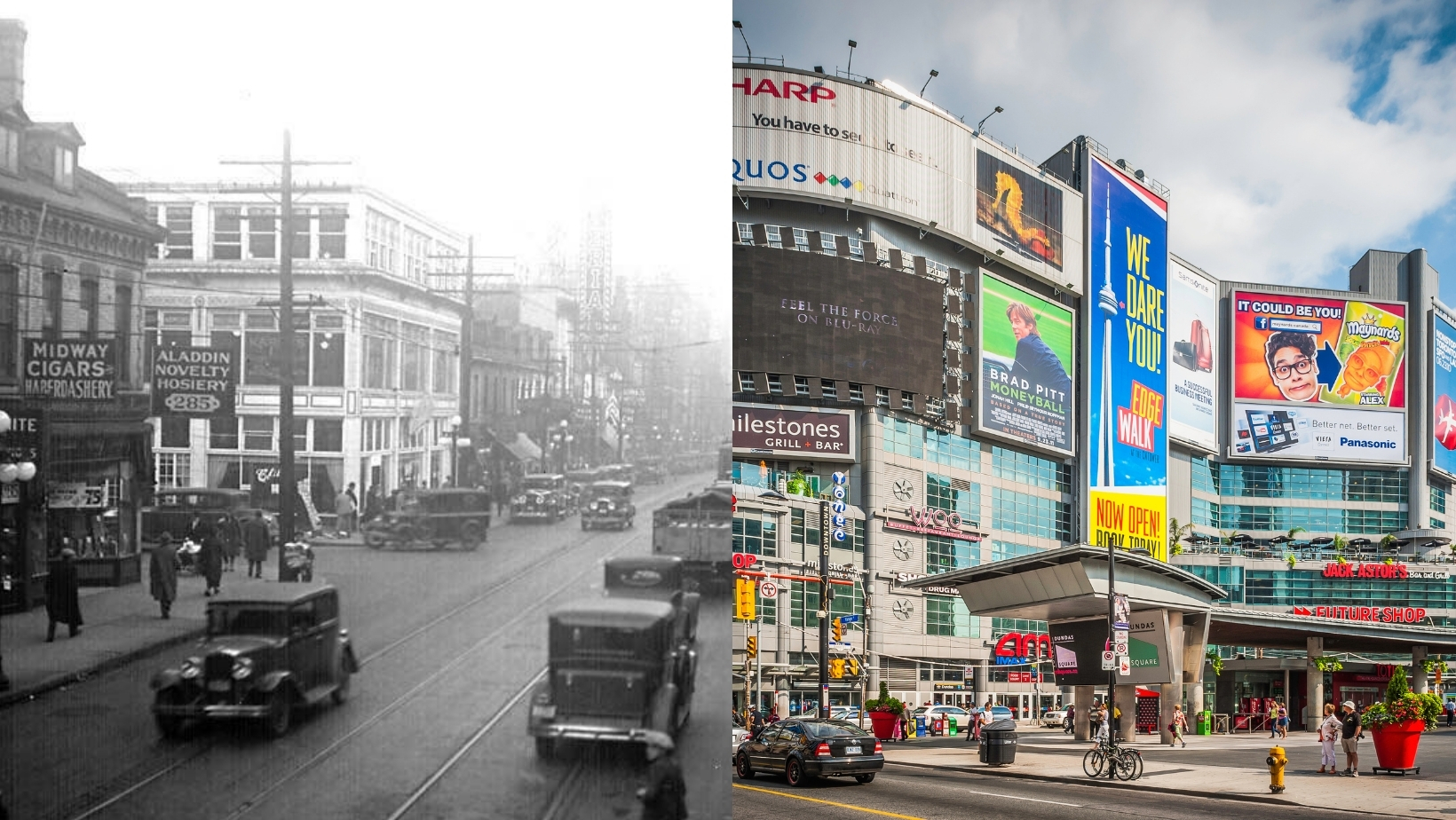
The thing about Yonge-Dundas Square is that you can’t really avoid it. It reminds me that the city has a logic of its own and just as we shape it, it shapes us. This article is going to talk about what Yonge-Dundas is beyond it just being an intersection. So, what is it? Well first of all it is an intersection. Stay with me. I find that newcomers to Toronto tend to get a kick out of the square because in many ways, it’s where small towners and suburbanites get their first exposure to Toronto.
RELATED: Then vs Now: Yorkville >>>
Yonge-Dundas Square: The Crossroads of Adventure
Surrounding the square is Ryerson University, The Eaton Centre, and a few of the city’s big theatres. Seeing a show, going to your first class, or seeing the big mall are some of the most common reasons for a first trip to Toronto. For the teenager making their first solo trip to the city, Yonge Dundas is the crossroads of adventure. It’s where people fall in love with the city, it’s the intersection of adulthood and freedom. When you exit the subway station and see the bright neon lights, the hustle and bustle of the scramble, it can be a real “we’re not in Kansas anymore’ moment.
ADVERTISEMENT |
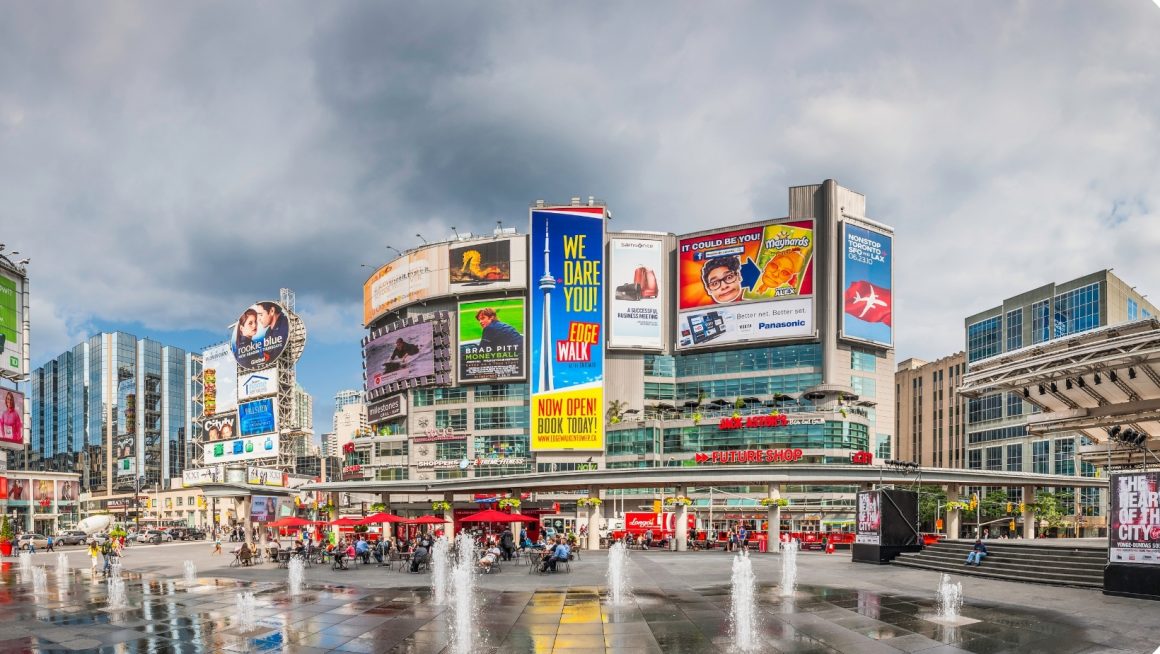
For those of us who have had more time to explore Toronto, the square is less enthralling. On the contrary and in spite of its busyness, it can seem a little empty. Neon advertisements for American brands you can get online, or in any mall don’t seem so cosmopolitan. Now here’s a question: why is it like that? How come this centre of city life wears thin?
Paving Over Toronto’s History
Here’s my take, Yonge-Dundas was actually designed to pave over a part of Toronto history the city prefers to forget. The area around Yonge and Dundas used to be a problem. Yonge had long since established itself as Canada’s main street, yet this busy strip of it didn’t exactly scream “see our city here.” Yonge-Dundas clubs like the Colonial Tavern, Friar’s Tavern, the Sapphire, and the Blue Note at one point formed the hub of the city’s jazz scene. Toronto didn’t like that. The Jazz of its heyday wasn’t Michael Bublé singing Sinatra’s greatest hits. It was sketchy. For one thing, Jazz was American and when city’s founder John Graves Simcoe built Toronto after the American Revolution, he hoped it would be a counter city on a hill.

Toronto was meant to be a model of good, sensible British aristocratic governance in juxtaposition with uncivilized, democratic Americans. For the city’s elite, that Toronto eventually grew into a centre of prohibition would have been a point of pride. Now even today, when we think of Jazz, we often think raucous speakeasys, and people reveling in booze. The people of “Toronto The Good” certainly shared those assumptions.
The other thing about Jazz is that it has deep connection to the African American community and this connection can’t be ignored when you look at the moral panic that surrounded the genre. Yonge and Dundas and the “Toronto Sound” was seen as everything the power brokers of Toronto feared the city would become: American, drunk, and Black. Prejudice made it hard to see the area’s value. Hopefully, the city will make an effort to celebrate the square’s Jazz connections instead of forgetting them.
ADVERTISEMENT |

Sam the Record Man
The popularity of Jazz would decline but music remained an Important part of Yonge and Dundas into the turn of the millennium. One important piece of the that history was Sam the Record Man. You still see the old neon sign in the square, a nod to Sam Sniderman’s record store. For a generation, the store was where you’d go to discover new artists and Sniderman worked hard to promote Canadian acts like the Guess Who and Rush to his clientele.

“Clean Up Yonge”
Now something interesting happens when you start saying a neighbourhood is sketchy, full of vice and danger. When you start saying those things, people looking to get their fill start to show up along with accommodating services. The area around Yonge and Dundas became home to many of Toronto’s strip clubs and brothels. Most people at time considered Toronto’s most prime piece of real estate to be blighted. By the 70’s this had become “common sense” along with an attempt to brand Toronto as “The City that Works.” It remains a point of pride among the city’s urban planning community that officials from major American officials in the 70’s and 80’s would come to humble Hogtown to see how we had avoided the race riots and slums of urban America.
Having our main street become the last thing we wanted to show guests was an embarrassment. In 1977 the city found a reason to declare war. 12-year-old Emanuel Jaques had been found dead, sexually assaulted, and tortured in a massage parlour near Yonge-Dundas. This instigated the city’s decades long crusade to “clean up Yonge”. Unfortunately, a lot of the press tried to play up a homosexual spin to the killing, turning a tragedy into an opportunity to go after already marginalized communities. When the city said clean up Yonge, they meant push sex workers and LGBTQ people out.
A Missed Opportunity?
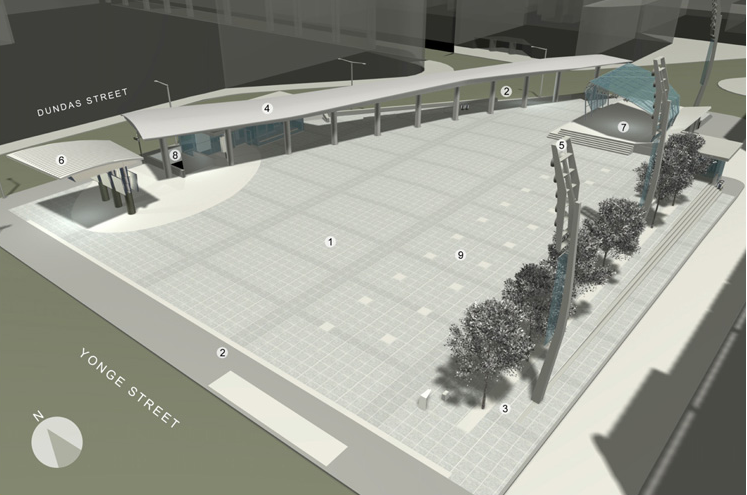
Critics say that Yonge-Dundas is boring and a missed opportunity. The city has little greenspace and only so many chances to experiment. Yonge-Dundas is full of concrete and Times Square energy. New Yorkers famously dislike Times Square. I think in some ways the point of Yonge-Dundas was to play it safe, make an accessible space with safe choices. The city had spent so long being frustrated with the risqué. It’s no surprise they weren’t interested in being experimental.


It’s even less surprising that Yonge-Dundas makes no efforts to put its history on display. In retrospect, the sense of rootlessness the place can have seems purposeful. Though the square’s forgotten history isn’t easy to see, the absence becomes jarring once it’s remembered. Even so, the space still works, people gather there for protests and celebrations like any other public square. Perhaps in time the new place will start to grow into itself. As people keep using the square and more and memories are made, we may find that Yonge-Dundas occupies a dearer place in our affections. Maybe we can start to remember the past along the way.
ADVERTISEMENT |